Cardiomegaly
Chest X-ray finding of an enlarged cardiac silhouette that can suggest underlying heart disease or fluid overload
Cardiomegaly is the radiographic appearance of an enlarged heart silhouette on chest X-ray, though projection and technique can affect the measurement.
Cardiomegaly means the heart looks enlarged on chest X-ray or CXR. It is a finding rather than a diagnosis, and it often needs to be interpreted alongside symptoms, heart failure signs, and the imaging view used.
Representative X-ray
Illustrative reference image for this topic.
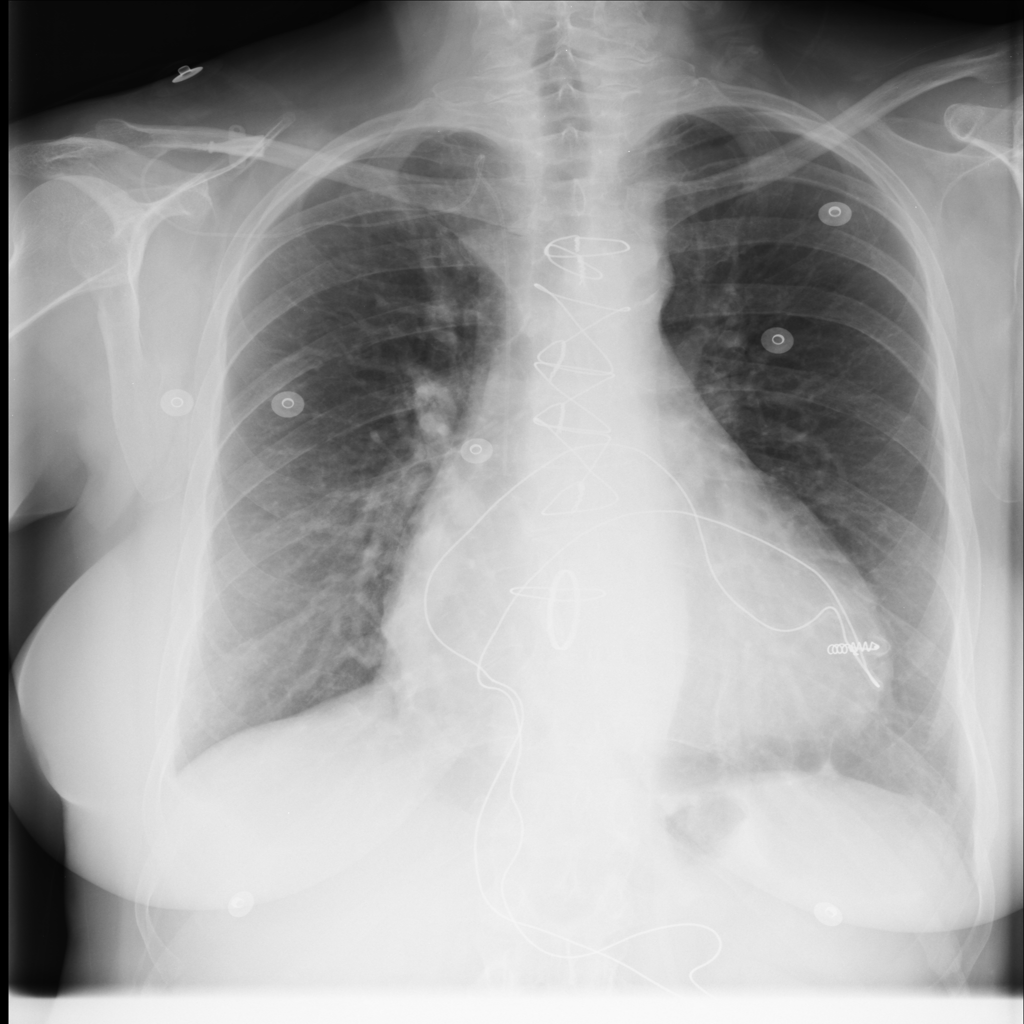
Reference image: PAT-357D · IMG-004 · Bounding-box highlight from source annotation where available.
What it is
- Cardiomegaly describes enlargement of the cardiac silhouette on chest imaging
- The appearance can reflect true heart enlargement, chamber dilation, pericardial fluid, or technical factors that exaggerate heart size
How it appears on chest X-ray
- On chest X-ray, cardiomegaly is usually suggested when the heart silhouette looks enlarged relative to the chest width, especially on a standard PA film
- Portable AP views can make the heart appear larger than it really is
What radiologists look for
- Radiologists consider projection, patient positioning, cardiac silhouette size, mediastinal contours, and whether there are related signs such as pulmonary vascular congestion or pleural effusions
How X-ray helps
- Chest X-ray can suggest that the heart silhouette is enlarged and can show related findings such as pulmonary vascular congestion or pleural effusions
- It does not replace echocardiography for structural heart assessment
Common causes
- Possible causes include heart failure, cardiomyopathy, long-standing hypertension, valvular disease, congenital heart disease, and pericardial effusion
Symptoms / associated symptoms
- Cardiomegaly itself may cause no symptoms
- Symptoms usually depend on the underlying cardiac problem and can include shortness of breath, swelling, fatigue, or exercise intolerance
Risk factors
- Risk factors relate to the underlying cause and can include hypertension, known heart disease, prior myocardial injury, valvular disease, and fluid-overload states
Why it can matter clinically
- Clinical significance depends on the underlying cause
- Some causes are chronic and manageable, while others may indicate significant cardiac dysfunction or fluid around the heart
When to seek medical care
- New shortness of breath, chest symptoms, fainting, leg swelling, or signs of worsening heart failure warrant clinical review
Evaluation and diagnosis
- Evaluation may include history, exam, ECG, echocardiography, laboratory testing, and correlation with the chest X-ray appearance
Treatment approaches
- Treatment depends entirely on the cause
- Some patients need long-term heart-failure therapy or blood-pressure control, while others need different cardiac evaluation and management
Medication classes clinicians may use
Medication classes may include drugs used for heart failure, blood-pressure control, rhythm management, or other specific cardiac conditions depending on the cause.
Treatment modalities commonly paired with medication decisions
- treating the underlying cardiac cause
- fluid management when appropriate
- blood-pressure management when relevant
- echocardiographic assessment
- specialist cardiology follow-up
Diuretics
May be used when fluid overload contributes to symptoms.
- furosemide
Heart-failure and blood-pressure medications
May be used when cardiomegaly reflects chronic cardiac disease or ventricular dysfunction.
- ACE inhibitors
- beta blockers
- ARB-class medicines
Need help reviewing your own X-ray?
If you landed here because you are trying to understand a chest X-ray result, you can upload an image for an educational review and then use the related finding guides to go deeper.
FAQ
Does cardiomegaly on X-ray mean I definitely have heart failure?
No. It can be associated with heart failure, but it is not specific for one diagnosis.
Can projection affect whether the heart looks enlarged?
Yes. Portable AP chest X-rays can make the cardiac silhouette look larger than it would on a standard PA view.