Mass
A larger focal opacity or lesion that may need further evaluation
Mass is an imaging term for a larger focal lesion or opacity that needs clinical and imaging context.
A mass on X-ray means there is a larger focal abnormality or density that stands out from surrounding tissue. It is a descriptive finding, not a diagnosis by itself.
Representative X-ray
Illustrative reference image for this topic.
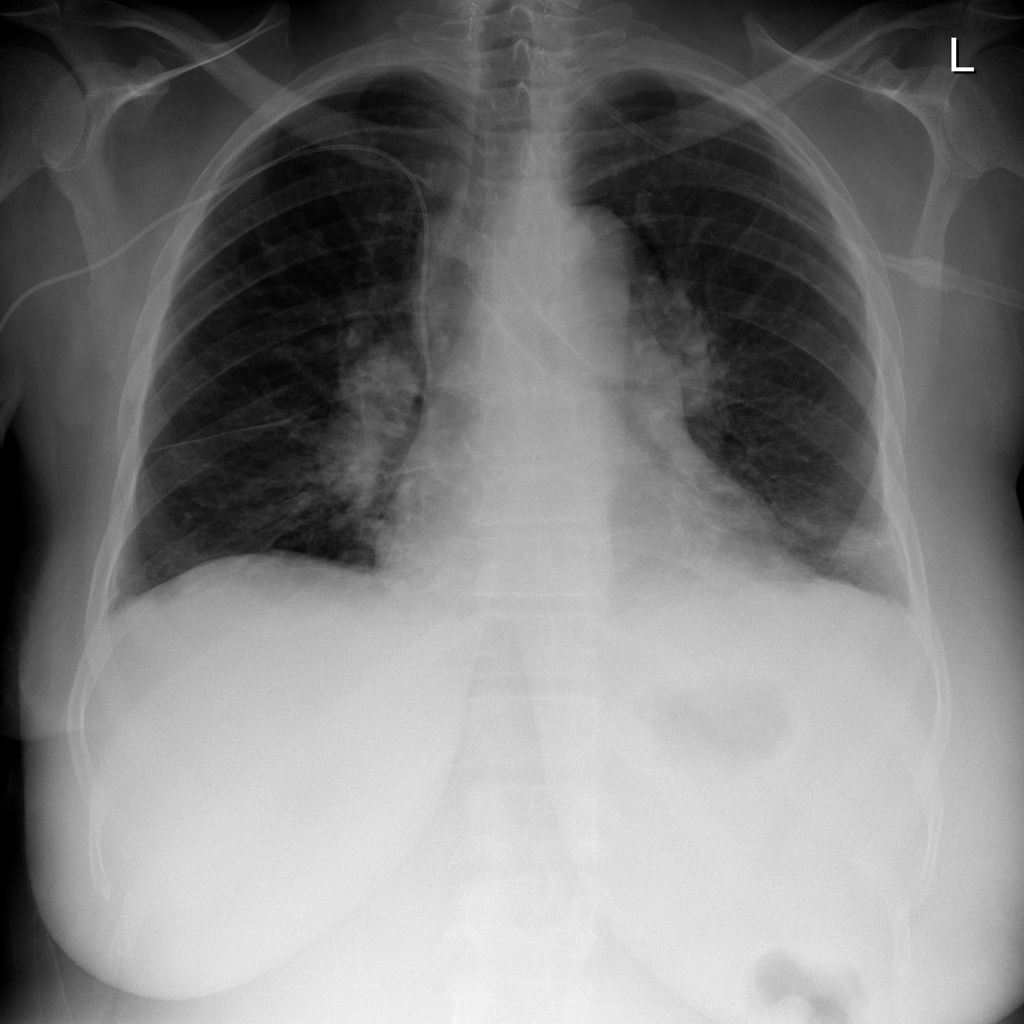
Reference image: PAT-4F3F · IMG-024 · Bounding-box highlight from source annotation where available.
What it is
- A mass is a radiographic descriptor, not a diagnosis by itself
- It may reflect benign or malignant causes, infection, inflammatory change, vascular structures, or overlap artifact depending on context
How it appears on chest X-ray
- On chest X-ray, a mass often appears as a relatively well-defined focal opacity larger than a nodule
- Shape, border, density, and location all affect interpretation
What radiologists look for
- Radiologists assess size, margins, location, calcification pattern, associated atelectasis, pleural findings, and whether cross-sectional imaging is needed
How X-ray helps
- Chest X-ray can identify a suspicious focal lesion and trigger further workup, but it is usually not enough to define the cause with certainty
Common causes
- Possible causes include benign tumors, malignancy, infection, inflammatory lesions, vascular abnormalities, or overlapping anatomic structures
Symptoms / associated symptoms
- Symptoms depend on the cause and may include cough, chest discomfort, shortness of breath, weight loss, or no symptoms at all in incidental findings
Risk factors
- Risk factors depend on the cause and can include age, smoking history, prior cancer, chronic infection risk, and environmental exposures
Why it can matter clinically
- A mass can matter clinically because some causes require urgent or thorough follow-up, especially when the finding is new, enlarging, or suspicious in appearance
When to seek medical care
- If a mass is newly reported or associated with concerning symptoms, timely medical follow-up is important
Evaluation and diagnosis
- Evaluation often includes comparison with prior imaging, CT, clinical history, and sometimes additional testing to clarify the cause
Treatment approaches
- Treatment depends entirely on the underlying cause
- Some masses require monitoring, while others need specialist evaluation, biopsy, or treatment
Need help reviewing your own X-ray?
If you landed here because you are trying to understand a chest X-ray result, you can upload an image for an educational review and then use the related finding guides to go deeper.
FAQ
Does a mass on X-ray mean cancer?
No. Cancer is one possibility, but not the only one. A mass is a descriptive imaging finding that needs evaluation.
Can X-ray alone tell what a mass is?
Often no. CT and clinical correlation are commonly needed.